

EnquireSee dates

Our approach

We design learning that people can use. Our courses bring ideas into practice through discussion, experimentation and work on real challenges, so participants leave ready to try something different.

From Stockholm, we bring people together to think well, learn from one another and make useful change. A welcoming, thoughtful environment helps people participate fully and do their best work.

A woman walking through a light, plant-filled Nordic office

Five principles that guide our work

These principles shape how we design, facilitate and improve every learning experience.

Practical enough to use

People should leave with a useful next step and energy to try it.

That might mean a new way of approaching a conversation, a tool to use with a team, a clearer way of making a decision or a different way of thinking about a familiar problem.

We want the distance between learning something and using it to be as short as possible. Participants leave with ideas they have already worked on, adapted and made their own.
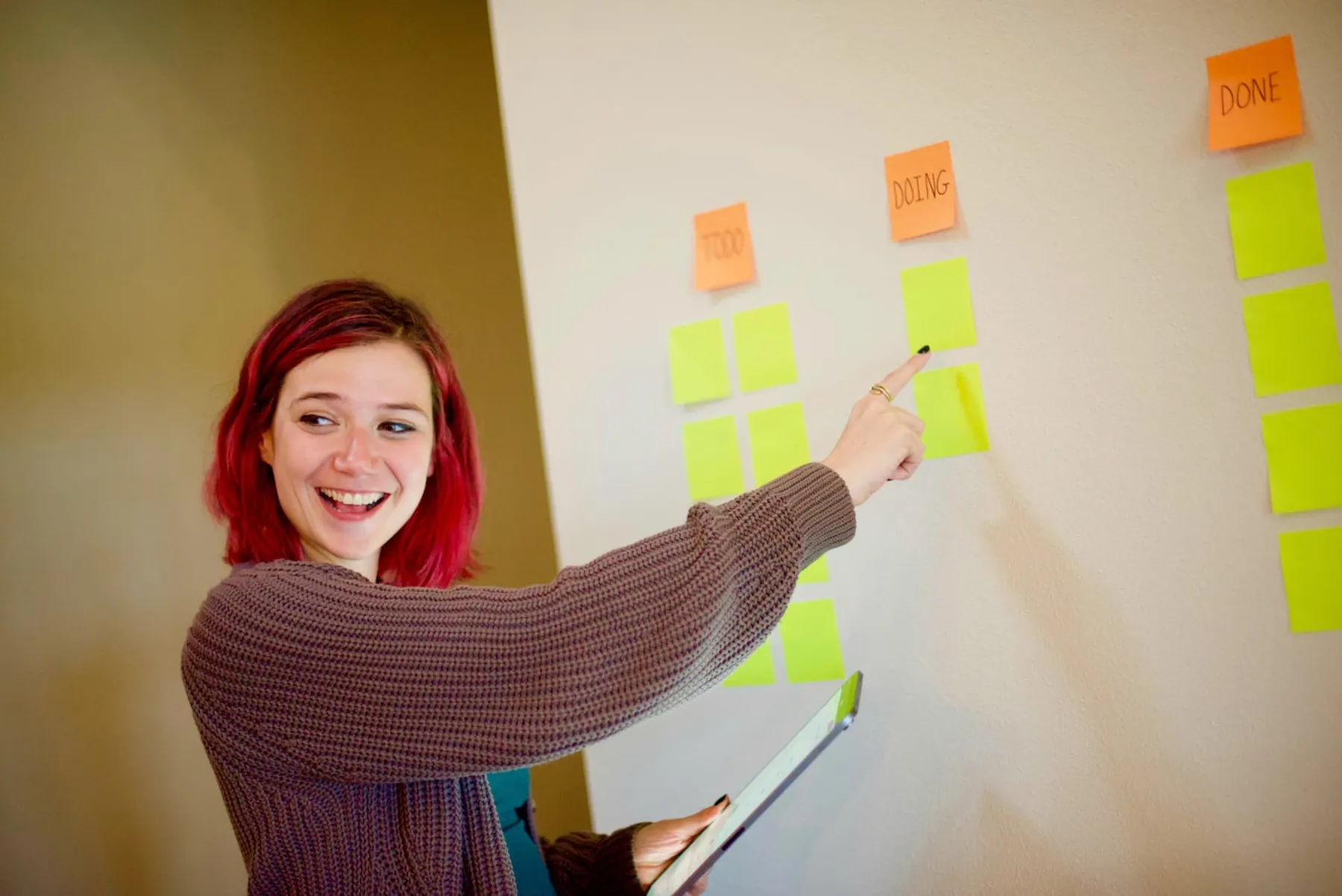

A facilitator smiling while moving sticky notes across a planning wall

Learning designed to change something

We start by asking what should be different afterwards.

What should people understand more clearly? What should they be able to do differently? What conversations, decisions or behaviours should change as a result?

Those questions shape the learning experience from the beginning. A successful programme gives people something meaningful to take back into their work.

Human by design

People learn best when they have something real to do together.

Our learning is practical rather than lecture-led. Short inputs give people a shared starting point. Then they discuss, make, test, question, rehearse and apply the ideas to a real situation from their own work.

Depending on the work, that might involve visual thinking, post-its, practical challenges, making art, group discussion, prototyping, observation, feedback or LEGO® Serious Play® activities. This gives people something concrete to work with, together.

Evidence-informed

Theory earns its place when it helps people act differently.

Research matters to us, along with established models, useful frameworks and good theory. We use them when they help people understand something more clearly or make a better decision.

Our job is to turn that evidence into learning that is clear and useful, while keeping the complexity that makes an idea worth learning.

An environment where people can learn well

People learn better when they feel welcomed, respected and able to take part.

We create the conditions for people to think and participate well: a clear purpose, skilled facilitation, regular breaks, fika, check-ins and enough space to think before contributing.

There is serious work to do, but a good learning experience should give people energy rather than drain it. People should be able to ask questions, make mistakes, contribute their experience and enjoy working with others.

Two colleagues talking and laughing by a bright office window

How we put it into practice

Learning needs FLEX. And the right PACE.

FLEX + PACE is how we design learning at The Nordic Learning Company. FLEX brings purpose, understanding, practice and application together. PACE helps us respond to what people already know, give them meaningful choices, set appropriate challenges and make room to learn with others.

What learners do

Start with a meaningful purpose.
Build understanding.
Practise, test and refine.
Revisit and apply learning beyond the course.

What we design for

Start where people are.
Give people meaningful choices.
Stretch thinking with appropriate support.
Make space for dialogue and feedback.

Built around quality

ISO 21001

Educational Organisation Management Systems

Our programmes are designed around clear learning objectives, participant needs, application, evaluation and continual improvement.

Our learning and quality processes are aligned with ISO 21001, the international management standard for organisations providing education and training.

Design

Clear objectives, shaped around what participants actually need.

Deliver

Facilitation that keeps people active and involved.

Evaluate

Honest evidence about whether the learning did what it set out to do.

Improve

What we learn goes straight back into the next design.

For us, this means being systematic about something we care deeply about: designing learning well, understanding whether it worked and making it better.

Talk to us about your work.

Tell us what needs to change. We'll tell you how we would approach it.